X–Y gantry testbed for planetary robotics
A reconfigurable 2-D gantry that positions a soil bin under a fixed linear actuator, so the lab can run penetration tests into icy regolith at programmed locations instead of moving the rig by hand.
The gantry
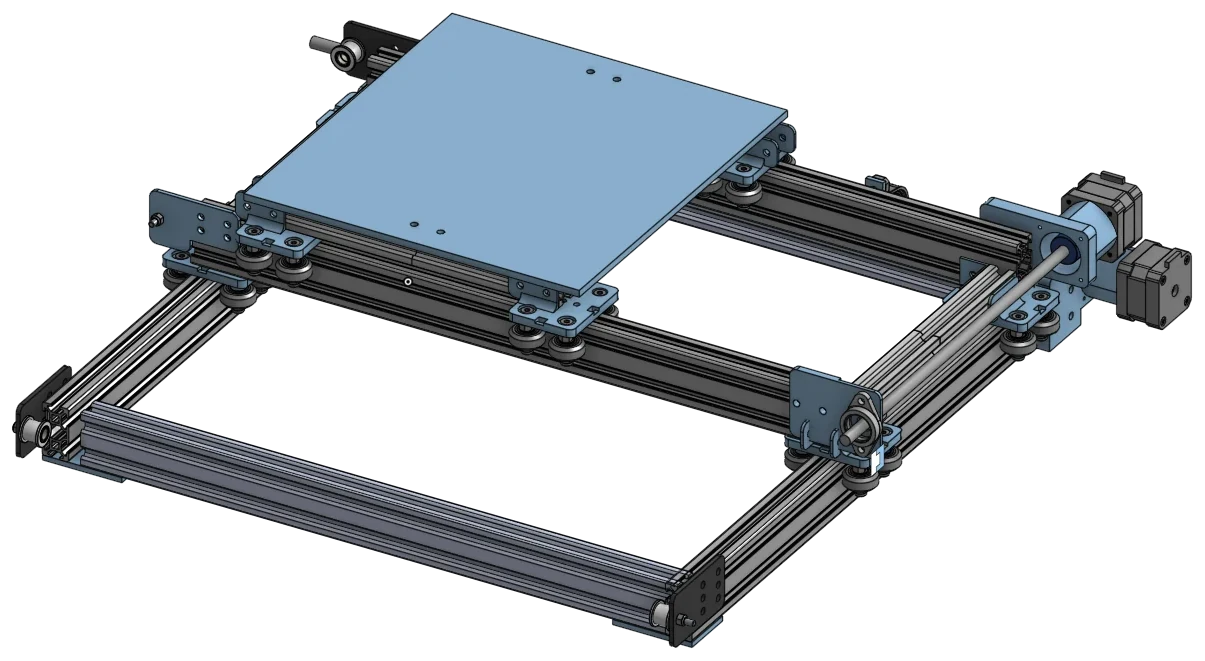
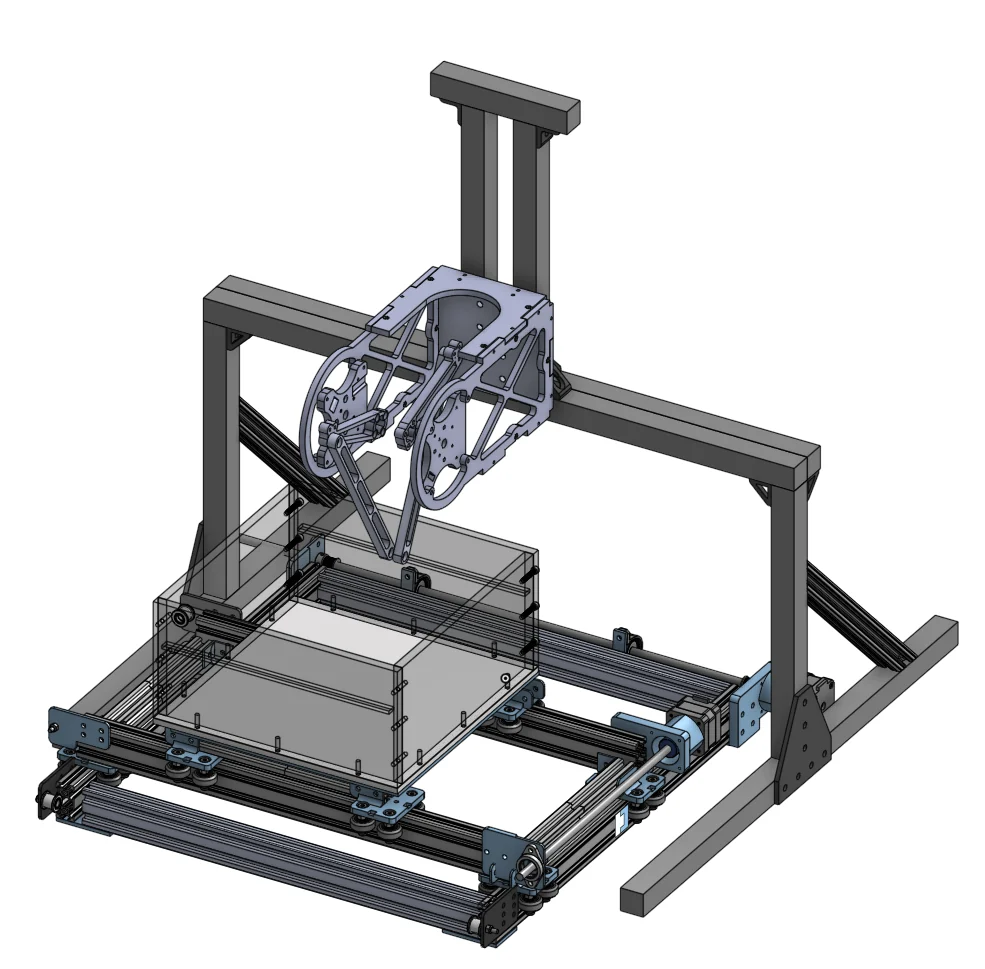
Designed in Onshape. The carriage plate rides V-wheel carriages on aluminum extrusion, with a stepper-driven lead screw on each axis.
The problem
LASSIE studies how legged robots move over planetary soil. The lab measures that by driving a probe, or the Traveler robot leg, down into icy regolith with a linear actuator and recording how the soil responds, including stick-slip behavior.
Before the gantry, the actuator and leg had to be moved by hand to each penetration location. That was slow, and the positions were hard to repeat from one test to the next.
Design
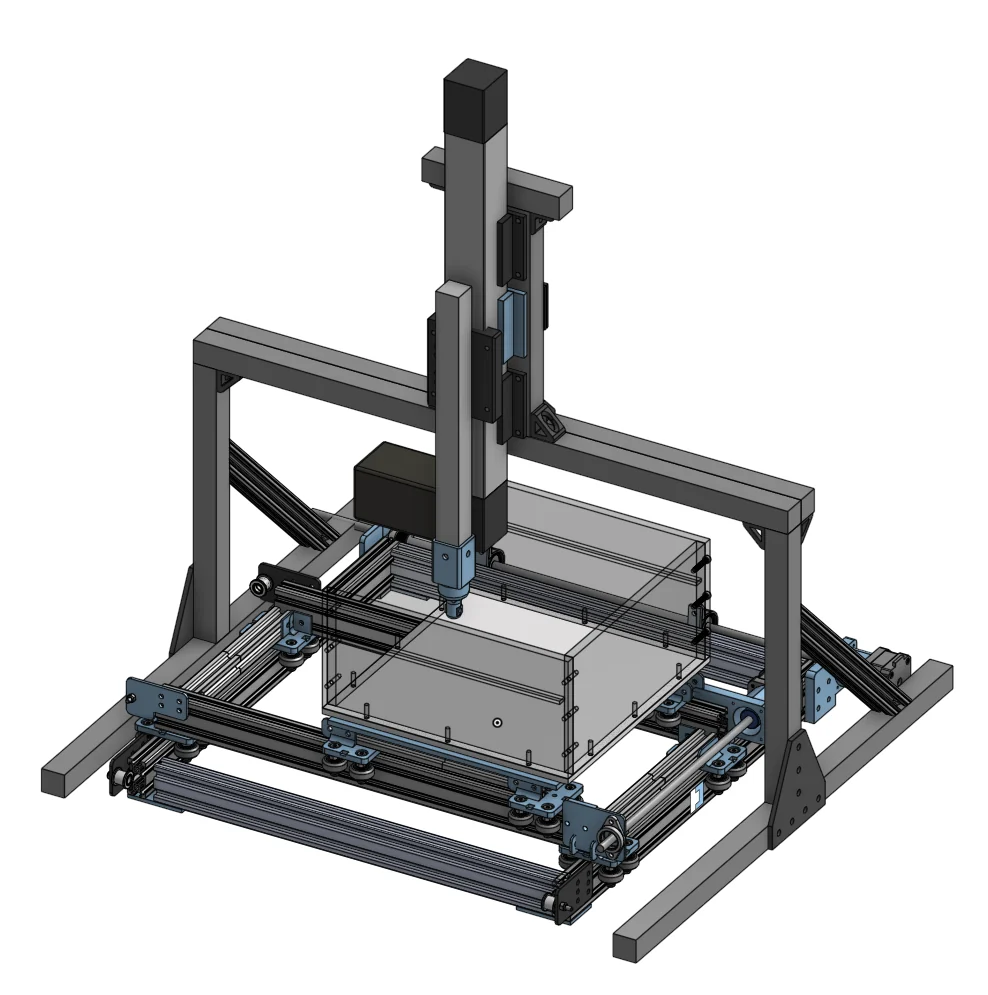
The gantry moves the experiment platform in X and Y underneath a stationary actuator. I designed the frame so it can be rebuilt at different sizes and the platform can be swapped, which lets the lab use it for other experiments too.
It also adds motion the linear actuator can’t make on its own. For a shear test, the actuator plunges the toe into the soil and the gantry then drags it sideways through the regolith.
I specified or 3D-printed about 55 motion components and built the testbed with 213 × 213 mm of travel.
Running tests
A single command runs a 3 × 3 grid at 63.5 mm pitch: move to a point, penetrate 55 mm, retract, move to the next. That took manual positioning out of the test loop, and the testbed is still in use for characterizing stick-slip on Mars regolith simulant.
Victoria: add the motion controller and firmware, how you verified position accuracy, and a force trace from a real run if you have one.
Preparing the soil
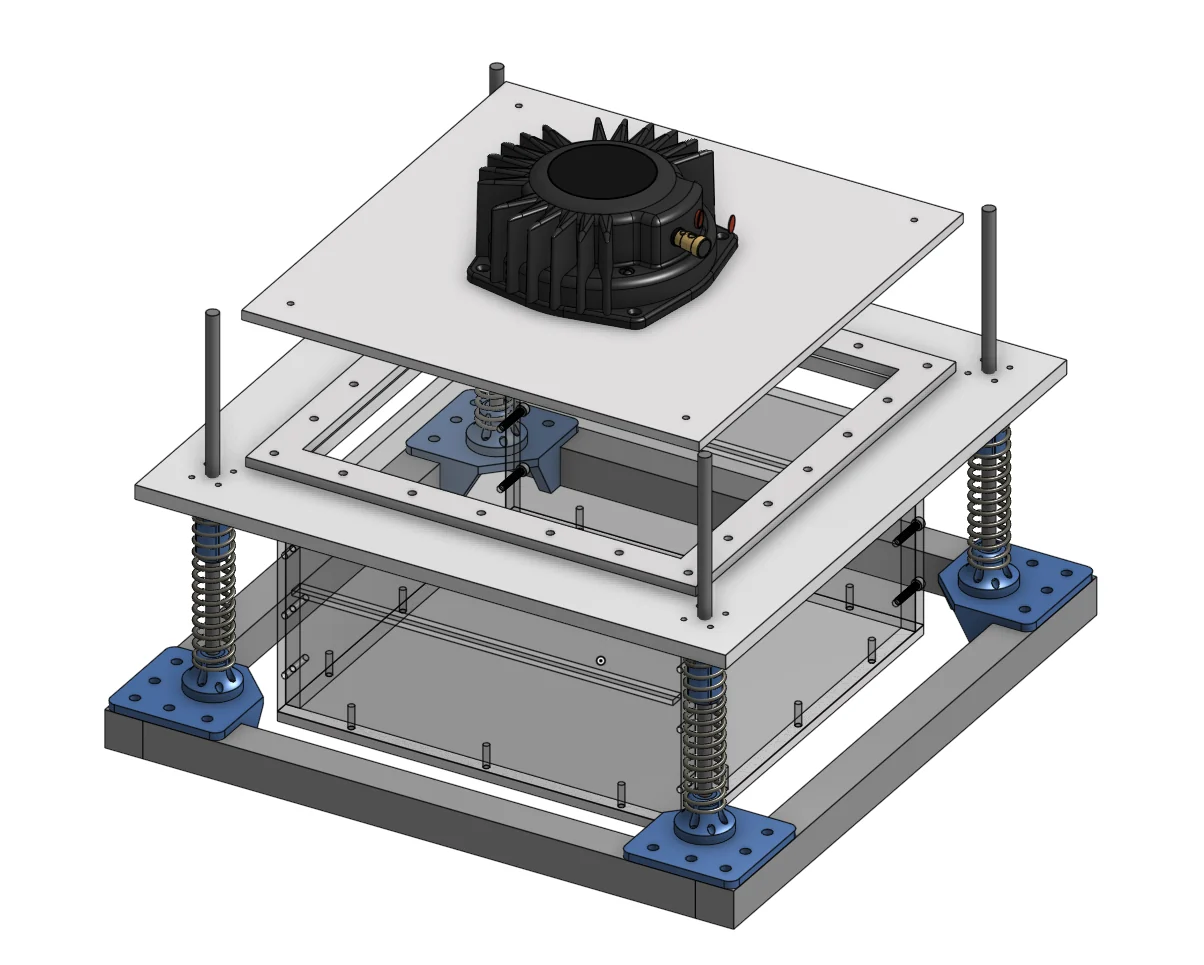
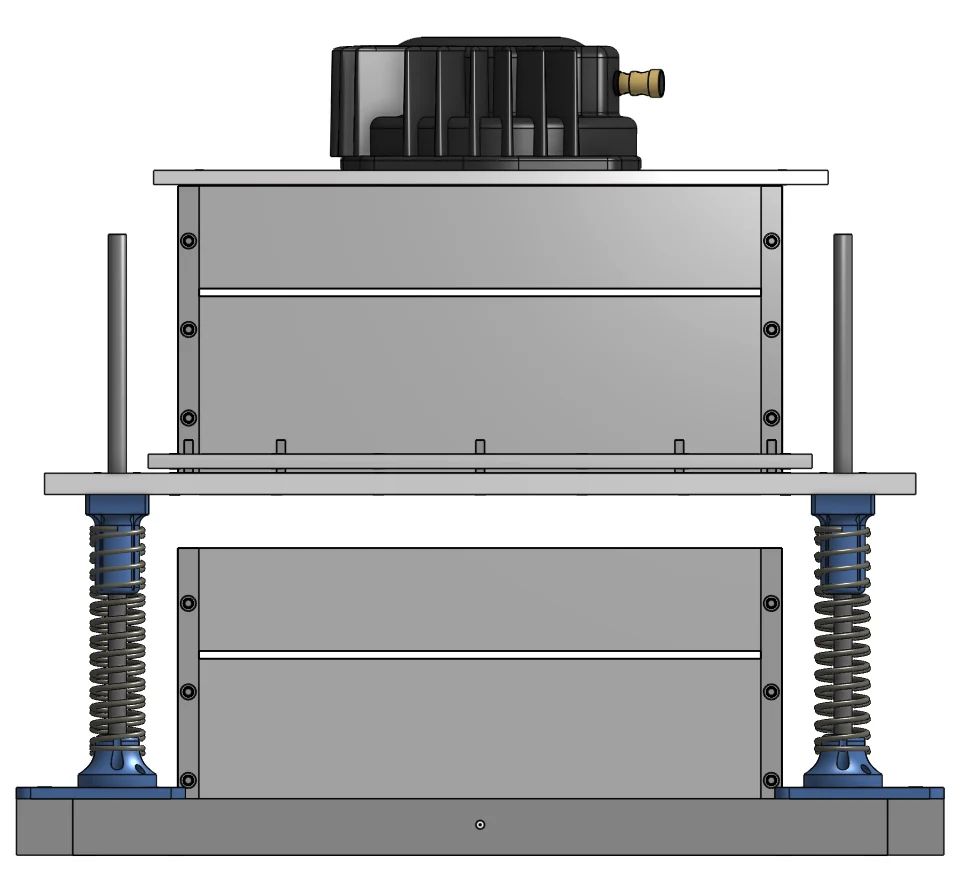
Icy-regolith tests need consistently packed wet sand. Sand goes into a top box on a spring-supported platform. A bass shaker on top vibrates it vertically at a set frequency and amplitude, and a wire mesh between the platform and the box breaks up clumps, so the sand settles evenly into the experiment box below.
Victoria: confirm your role in the shaker box design.